
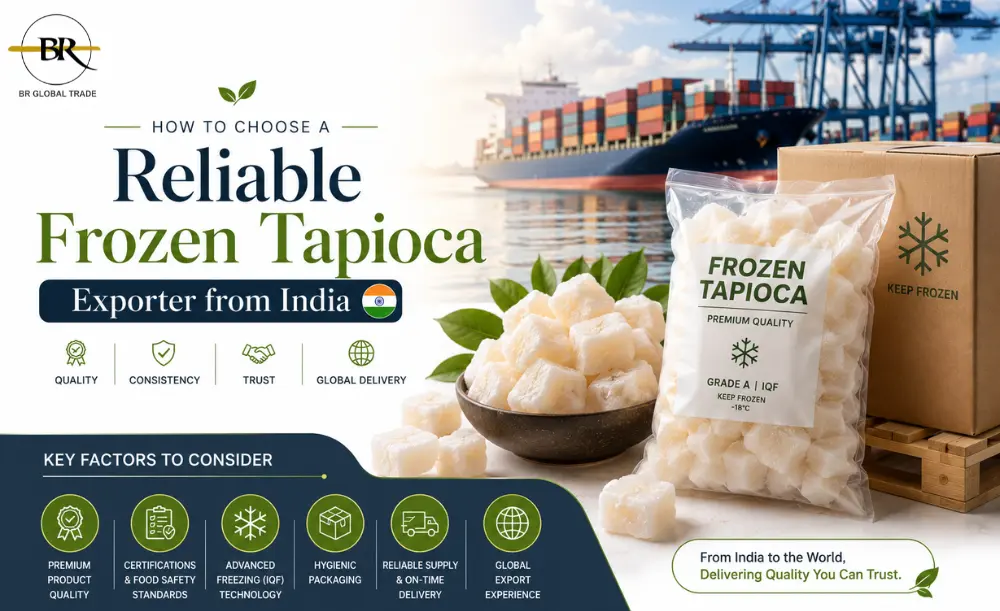

The acquisition of good-quality cassava root derivatives for the purpose of manufacturing is associated with specific kinds of difficulties concerning the role of global procurement departments.
Numerous international business representatives are quite certain that the range of uses for frozen roots is a uniform one, which means that all kinds of roots can produce the same results. Whereas the actual situation is that there is a significant difference in the features of the products depending on their age and the means of processing selected by the frozen tapioca supplier.
Poor processing choices can lead to miscalculations in starch getting decomposed, excessive humidity, and risks of microbial contamination in large quantities. All the differences cause disruptions in the process of producing food due to the change in the thickness of the final product. In this paper, critical operational parameters have been described.
Check Processing Standards and Starch Content Consistency
The main industrial benefit of cassava root can be found in its intrinsic composition. The entire procedure of moving the cassava from a field to a storage freezer is very delicate and requires compliance with many different steps of processing, such as mechanical peeling, careful washing, and grating/cutting under controlled temperature, to be completed. It is crucial to pay attention to the peeling of the cassava because of the presence of cyanogenic glucosides in the skin.
Another essential process during cassava processing is to control qualitative and quantitative indicators of raw starch and moisture in the final product. Based on our experience of supplying frozen tapioca to different food producers, the issue of starch content difference between different deliveries is often omitted by the buyers, which can cause many problems connected with determining the texture of the final product.
The amount of water within cassava flakes can vary depending on the situation, and if the situation differs too much from the previous batches, the flakes can be cooked incorrectly, and the texture of the end product will be ruined.
Understand Product Varieties and Cut Forms
Global industry buyers have different physical cuts as per their specific commercial food processing needs. Therefore, industry sources with expertise in agricultural processing should be able to guarantee various physical cuts like uniform diced cubes, perfectly grated puree, and fresh, frozen, peeled tapioca roots.
Industrial food service suppliers and soup manufacturing companies prefer the diced format because, early on in the process, the cubes are formed, and afterwards, they retain their original geometric shape even when subjected to extreme temperatures.
On the other hand, grated puree format comes as the only gluten-free texturizer for established bakery lines, starch production facilities, and experimental beverage manufacturers. In case you pick the proper physical cut from the agricultural supplier, it will allow you to significantly cut down on processing time at your equipment, get rid of secondary processing waste, and increase the profitability of your production.
Take a look to frozen food supplier
Evaluate Year-Round Supply Reliability
The crop yield varies in consonance with the climatic conditions in a region, including monsoons, as well as soil properties. And to diminish the risk of being affected by sudden raw material shortages, you need to cooperate with a reliable and successful wholesale frozen food exporter. The exporter is able to provide an extensive network in agriculture in such important growing regions as Kerala and Tamil Nadu, and has access to facilities for keeping frozen food.
Referring to the information on the APEDA website, we can see that agriculture plays an important role in the Indian economy; hence, it provides a good yield of root crops all year round and allows reliable exporters to maintain their reserves of products even in periods of low agricultural production. If your supplier has sufficient cold storage, it minimizes the risks of sudden price increases for the product and stops the production process abruptly.
Also Read: Why Global Buyers Choose French Fry Exporters With Superior Oil
Verify Certifications and Food Safety Standards
The importation of raw agricultural products across borders necessitates compliance with international food safety regulations. It is essential for buyers to request digital evidence demonstrating that the production unit meets stringent quality requirements. Accordingly, reputable manufacturers should ensure that their production facilities are accredited and compliant with third-party audits, which include critical elements such as Hazard Analysis Critical Control Point (HACCP) programs and ISO 22000 food safety management.
If planning a large-scale distribution in superstores in Europe or the USA, it is important to have a BRCGS (British Retail Consortium) certification. Also, tapioca export from India need to comply with the Food Safety and Standards Authority of India (FSSAI) to ensure that the products do not contain more than the allowed amounts of harmful substances before they arrive at the port.
Assess Cold Chain and Export Logistics Experience
Efficient operations in maritime customs documentation, shipping container handling, and strict temperature-controlled shipping methods depend on rich experience and expertise. Cassava root has a very high water content and is very sensitive to temperature variations during the long sea transit of Cassava root. If the temperature inside the shipping container exceeds the required -18°C (0°F) level, the root pieces undergo the process of rapid starch retrogradation, release of moisture, and destruction from freezer burns.
The qualified exporters monitor the transport of their reefer containers by means of digital USB data loggers and prepare necessary compliance documents with maximum precision. Thanks to the excellent administrative processes, the exporters make sure that all important documents, including Phytosanitary Certificates and Certificates of Analysis, are compliant with the requirements at the port of destination.
Questions to Ask Before Finalizing a Supplier
Prior to entering into a supply agreement with bulk tapioca supplier, please ensure that you secure your sourcing activities by receiving suitable answers to the following technical due diligence checklist inquiries:
- What is the minimum authenticated count of the starch share that you have in your frozen cassava boxes?
- Which laboratory tests do you perform to ensure the low hydrocyanic acid content?
- Do you apply external ice coating to the cut pieces of cassava, and if so, what is the exact amount of water weight percentage?
- Can you provide us with a complete traceability document that shows which carton is linked back in the supply network journey to the growing region?
- Which shipping lines are you using, and what standard emergency procedures are followed in case the reefer container loses its power at port?
Partner With a Trusted Frozen Tapioca Exporter
Choosing the right frozen tapioca supplier demands an assessment of essential things, like proper starch quality and validated food safety certifications, as well as efficient cold chain administration. Keeping these technical factors prioritized is the best approach to protect your food production from low processing efficiency, failures of structural texture, and unforeseeable customs clearance problems. Checking your supplier’s manufacturing capacities now will guarantee the robustness of your retail supply chain in the future.
BR Global Trade offers certified frozen tapioca products wholesale, sourced through advanced blast-freezing processes, various cut shapes, and export-compliant cold chain systems. Contact us or email exim@brglobaltrade.com to discuss your specific sourcing and packaging needs.